
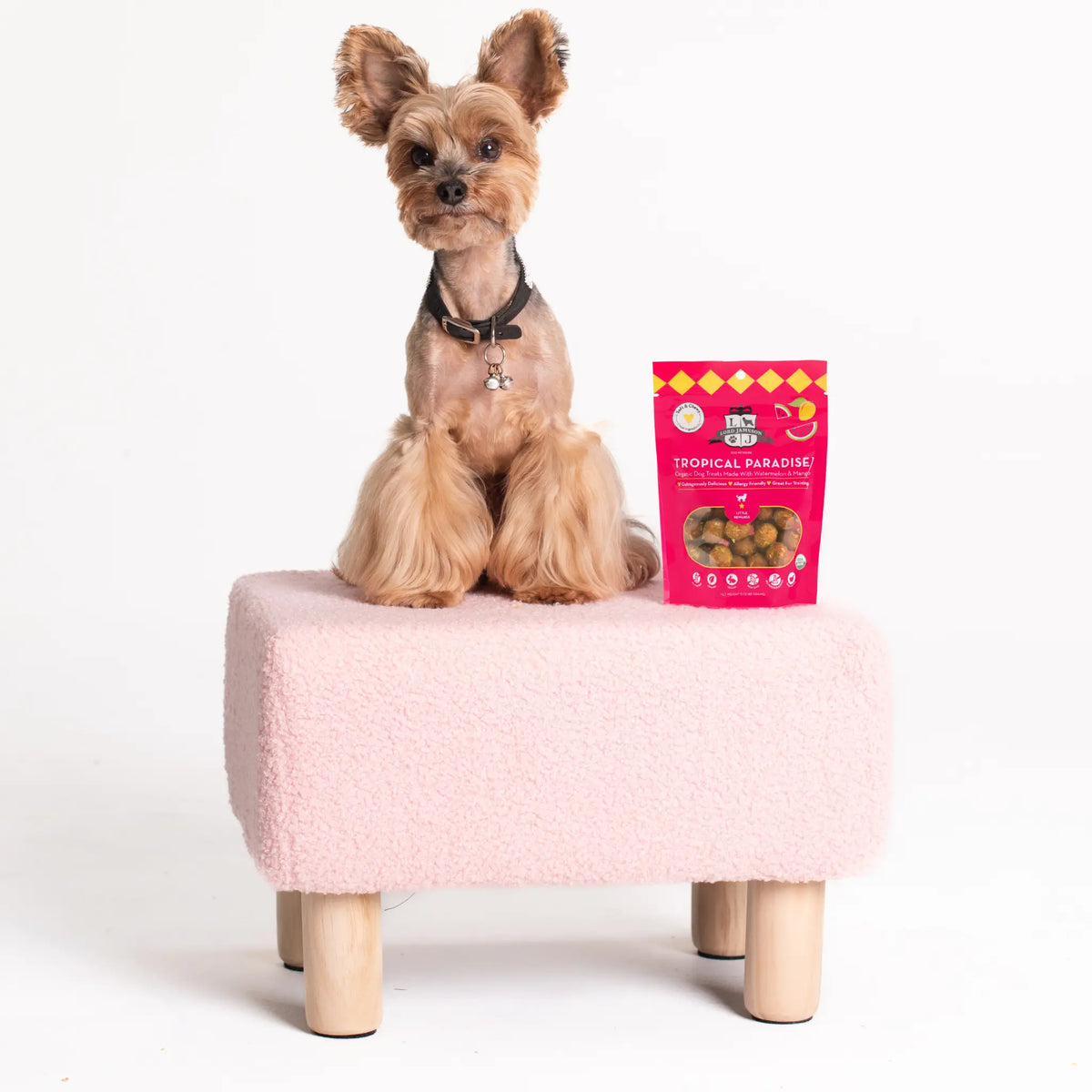
Best Treats for Small Breed Dogs: Size and Calorie Considerations
Don’t those little paws, bright eyes, and enthusiastic tail wags make it almost impossible to say no when your small dog asks for a treat? But when our pup weighs only a few kilograms, even a seemingly tiny snack can represent a meaningful portion of their daily calorie intake.
That makes treat size and calories particularly important for small breed dogs. The best treats aren't necessarily the biggest or richest ones. For smaller dogs, thoughtfully portioned treats made with quality ingredients can make everyday rewards easier to manage while still giving your furry companion something delicious to look forward to.
At Lord Jameson, we create USDA Organic dog treats using thoughtfully selected, whole-food ingredients, with options in different textures and sizes to suit different dogs and treating occasions. Our approach combines ingredient quality with nutritional intention, because even the smallest treat should be something you feel good about sharing.
Do Treat Size Matter for Small Dogs?
A treat that seems small to us can be relatively substantial for our small dogs. For example, a treat containing 10 calories represents a much larger proportion of the daily energy intake of a 7 kg dog than it does for a 30 kg dog. So, considering portion sizes alongside our furry friend’s overall diet helps keep them healthy.
Smaller treats can be particularly useful for:
-
Frequent training rewards
-
Reinforcing good behavior
-
Everyday bonding
-
Multiple rewards during walks
-
Dogs that need their calorie intake carefully managed
The idea isn't to stop treating your small dog. It's to make each reward appropriately sized.
How Many Calories Should a Small Dog Have?
There isn't one calorie number that applies to every small breed dog. Daily energy requirements depend on several factors, including:
-
Body weight
-
Age
-
Activity level
-
Breed
-
Life stage
-
Neutering status
-
Existing health conditions
-
Individual metabolism
A young, active dog may require considerably more energy than an older, less active dog of the same weight. Your veterinarian can help determine your dog's individual calorie needs and whether their current weight is appropriate.
Remember That Treats Count
Treats are not nutritionally "free." They contribute to your dog's overall daily calorie intake, so they should be considered alongside meals, chews, toppers, and other extras.
As a general veterinary nutrition guideline, treats and other extras are commonly recommended to make up no more than about 10% of a dog's daily calorie intake, with the remaining calories coming from a complete and balanced diet. For a small dog, that 10% allowance can be quite modest.
This is especially important if your pupper has any existing health concerns or is managing their weight.
Choosing the Right Treat Texture
Size isn't the only consideration. Texture matters too. Small dogs can have different chewing abilities and preferences depending on their age, dental health, jaw size, and individual personality.
Light and Crunchy Treats
Light, crunchy treats can make enjoyable everyday rewards without requiring a large, heavy portion.
Lord Jameson's LOVE PUFFS™, made with organic sorghum, offer a light and crunchy texture that can work well as an everyday reward.
Soft and Chewy Treats
Soft treats can be particularly convenient for training because they can often be broken into smaller pieces. They're also useful when you want a reward that feels special without necessarily giving your dog a large portion.
Always choose a texture appropriate for your individual dog's ability to chew and swallow comfortably.
Look for Quality Ingredients, Not Just a Small Treat
Just because you have a tiny treat doesn’t automatically make it a healthy one! When choosing snacks for your small dog, look beyond size and consider what's actually inside.
Look for:
-
Recognizable ingredients
-
Appropriate calorie content
-
Whole-food ingredients
-
Transparent labelling
-
Minimal unnecessary additives
-
A recipe that complements your dog's regular diet
This is particularly important because small dogs may receive several treats throughout the day. A cleaner treat can fit more naturally into an intentional approach to everyday rewarding.
Whole-Food Ingredients for Little Dogs
At Lord Jameson, we believe quality shouldn't be measured by the size or breed of any pup. Our recipes incorporate thoughtfully selected ingredients such as organic oats, fruits, vegetables, and botanicals, depending on the product.
Ingredients such as pumpkin, sweet potato, apples, blueberries, strawberries, and coconut provide natural flavor and nutritional value while helping create treats that our furry companions genuinely enjoy.
We also avoid GMOs, artificial preservatives, artificial flavors, processed sugars, and unnecessary fillers. It's our way of making treat time feel good for both ends of the leash.

Treats for Training Small Breed Dogs
Small dogs are just as eager to learn as their larger counterparts, and treats can be valuable positive reinforcement tools.
But when training sessions involve a lot of rewards, finding a way to manage the amount of food we give becomes a priority!
If you're working on sit, stay, recall, loose-leash walking, or simply reinforcing good manners, consider using very small pieces of an appropriate treat rather than giving a full-sized reward every time.
This lets you maintain the rewarding experience while keeping portions under control. With our soft and small treats, it is easy to break each treat into smaller pieces and keep the portions just right for your dog.
Looking For A Few Training Tips?
-
Break treats into smaller pieces
Our pets don't need a large piece to understand that they've done something right. -
Reward the behavior promptly!
Giving the treat immediately after the desired behavior helps your dog make the connection. -
Keep track of how much you're giving
It's surprisingly easy to lose count during an enthusiastic training session. -
Use praise, play, and attention too
Treats don't have to be the only reward in your dog's toolkit. -
Don’t forget to have fun with the little ones!
Dental Health
Did you know that small breeds can be more prone to dental disease? So oral health deserves particular attention. However, it's important not to assume that a crunchy treat can replace proper dental care. Treat texture alone isn't a substitute for regular tooth brushing, professional dental care when recommended, and appropriate veterinary check-ups.
If your dog has dental disease, missing teeth, painful gums, or difficulty chewing, ask your veterinarian which treat textures are appropriate.
How to Avoid Accidental Overfeeding?
Small dogs can be particularly easy to over-treat because their portions are tiny and their enthusiasm is anything but. A few practical habits can help:
1. Measure Their Daily Treat Rate
Rather than treating spontaneously throughout the day, decide how many treats your pup can have and work within that amount.
2. Use Smaller Pieces
For training and frequent rewards, smaller pieces can be just as effective as larger ones.
3. Account for Treats in Their Overall Diet
If your dog receives more treats than usual one day, you may need to consider their overall calorie intake rather than simply adding extras on top of their normal routine.
Don't make significant changes to their complete diet without veterinary guidance.
Why Lord Jameson Is a Thoughtful Choice for Small Dogs
At Lord Jameson, we understand that every pawsome pup deserves treats suited to their individual needs, whether they're a tiny puppy learning their first command or a much-loved senior enjoying a quiet afternoon with you.
Our treats are made with USDA Organic ingredients and thoughtfully selected whole-food ingredients. We offer different textures and sizes, including light and crunchy options and soft, chewy treats, giving pet parents more flexibility when choosing rewards.
Our philosophy is simple: treats should bring happiness while fitting thoughtfully into your dog's overall wellbeing. That's why we combine carefully selected ingredients with science-informed nutritional thinking, rather than relying on emotion alone.
Making Every Little Treat Count
Small dogs may have small bodies, but they deserve just as much thought and care when it comes to their treats.
Choosing appropriately sized portions, paying attention to calorie intake, selecting quality ingredients, and considering your dog's individual needs can help keep treat time enjoyable without unintentionally overfeeding.
At Lord Jameson, we believe there's something wonderfully special about those little moments… the excited eyes, the tiny tail wag, and the look that says, "Is that deliciously-smelling stuff for me?"
And yes, it is!
Made in the right size, very thoughtfully, and shared with much love.
FAQs
What size treats are best for small breed dogs?
Small, bite-sized treats are generally easier for small dogs to chew, enjoy and manage during training. Softer treats that can also be broken into smaller pieces can make portion control even easier.
How many calories should small dogs get from treats?
Treats should make up only a small portion of your dog’s overall daily calorie intake. The right amount depends on factors such as your dog’s size, age, activity level and health needs, so your veterinarian can help determine an appropriate daily limit.
Can I give my small breed dog treats during training?
Yes. Small dogs can enjoy treats as positive reinforcement during training. Choosing small treats or breaking larger treats into smaller pieces can help you reward good behavior without giving your dog more food than needed.
Read more
If your dog has a sensitive stomach, even something as simple as choosing a treat can require a little more thought. A treat that works perfectly well for one pup may not agree with another, which...

When summer arrives, watermelon becomes a familiar favorite for many of us. It is juicy, naturally sweet and wonderfully refreshing on a hot day. But has your furry friend ever shown you those big,...